
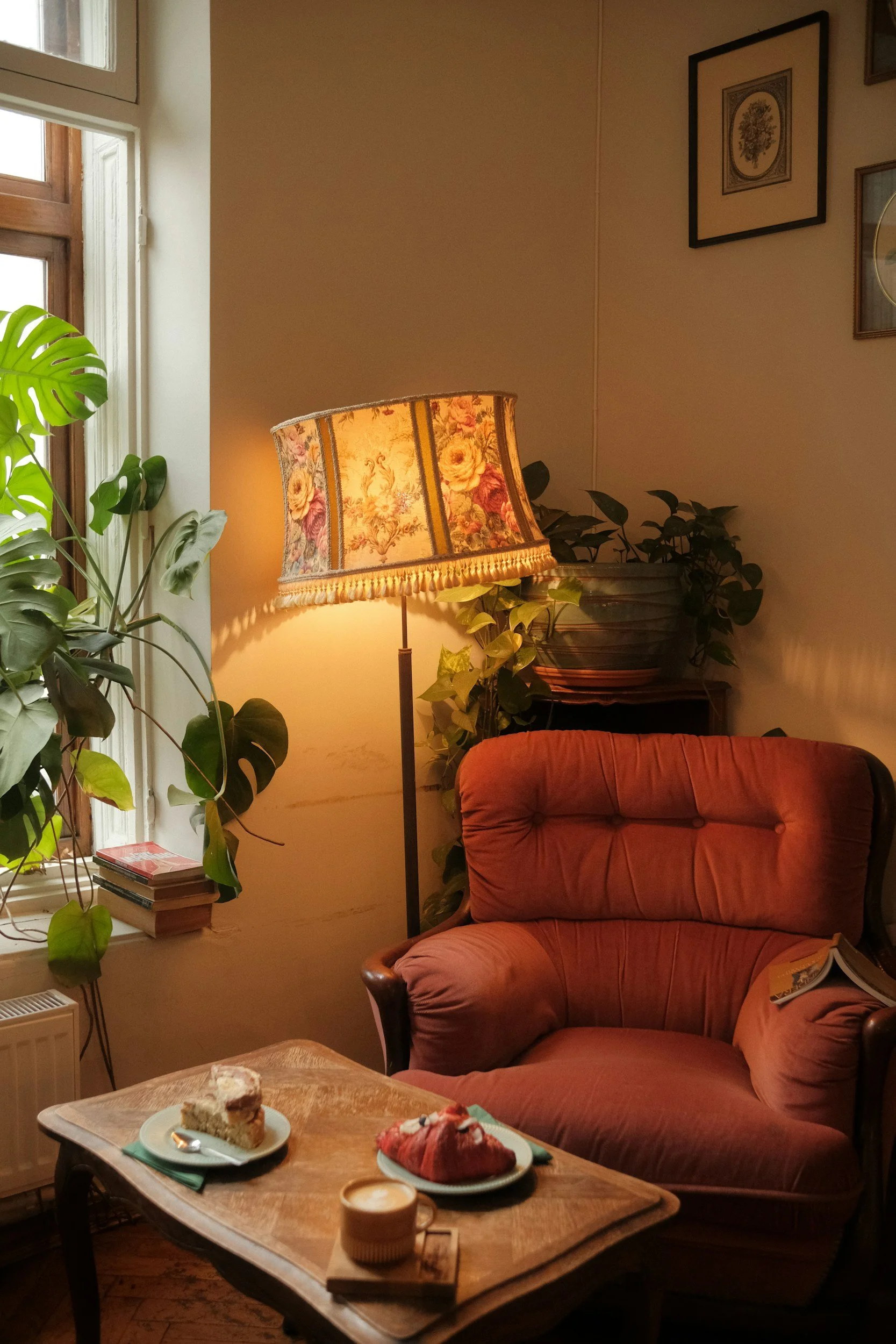
Picture it: a soft, enveloping chair tucked into the quiet corner beside a window. A chunky knit throw draped over the arm, a small stack of your most-loved books on the side table next to a candle glowing amber and warm. Rain tapping gently against the glass. The whole world outside doing its hurried thing — and you, completely still, completely held.
That space is real. And it is absolutely possible for you to have it. Most of us don't have a dedicated reading nook — not because our homes aren't big enough, and not because we don't deserve one, but simply because we've never stopped and decided to create it. We walk past that empty bedroom corner every single day without seeing it for what it could be.
Here's the truth: every home — whether it's a studio apartment, a rented townhouse, or a sprawling family home — has at least one underused corner, alcove, or overlooked spot just waiting to become your personal sanctuary. This guide will walk you through exactly how to find it, furnish it, style it, and make it the first place you want to sit down every single day.
STEP 1 OF 7
Find Your Spot — Every Home Has One
The first step has nothing to do with shopping. It's about looking at your home with genuinely fresh eyes. A reading nook doesn't require a dedicated room, a Victorian alcove, or a perfectly angled bay window — though those are magical if you have them. It requires one thing: an unused or underused space that you're willing to claim as yours.
Walk slowly through your home and look for the spots where nothing is really happening. Some of the best candidate spaces are:
● A bedroom corner beside a window — often the most naturally peaceful spot in the entire home
● An underused living room chair repositioned with intention and a dedicated lamp pulled up beside it
● A bay window with a simple cushion added to the ledge — instant reading perch
● A converted closet — remove the doors, add a bench seat and a shelf above it, and you have one of the most sought-after nook transformations on the internet
● An attic or basement corner where great artificial lighting can compensate for what natural light can't provide
The key criteria are simple: some sense of enclosure or definition (even a partial one), enough room for a seat and a small surface, and access to light — either natural or something warm and directed that you add yourself.
✨ Design Tip
Walk through your home as if you're seeing it for the first time. Ignore what's currently in each space and ask instead: What could this be? That empty corner beside the bookcase? That's your nook.
STEP 2 OF 7
Choose Your Seat — The Heart of the Nook
Everything else in your reading nook is a supporting role. The seat is the star. It sets the tone, defines the feeling, and determines whether you'll want to spend two hours there on a Sunday afternoon or just walk past it on your way to the sofa.
Consider which style speaks to the space — and to you:
● Oversized armchair or wingback chair — the classic choice, deeply enveloping, ideal for long reading sessions where you want to feel held
● Chaise lounge — luxurious, great for smaller spaces where you want to stretch your legs out fully
● Floor cushion or large pouf — casual, bohemian, and perfect for low-ceiling spaces or children's reading corners
● Built-in bench with cushion — requires more commitment but looks incredibly intentional and polished, especially in bay windows or alcoves
Don't overlook fabric and texture — this is what you'll be pressing your cheek against during chapter three. Bouclé, velvet, linen, and performance fabrics are all beautiful choices with varying degrees of practicality depending on your household.
✨ Budget Tip
A secondhand armchair recovered with a fresh throw or reupholstered in a fabric you love can look completely transformed for a fraction of the cost of buying new. Thrift stores and online marketplaces are full of great bones waiting for a second life.
STEP 3 OF 7
Layer the Softness — Pillows, Throws, and Rugs
A reading nook lives and dies by its softness. This is where coziness becomes tangible — where the space stops looking like a chair in a corner and starts feeling like a destination.
● Pillows: Two to three, in varying sizes and textures, all living within a cohesive color story. Mix a larger lumbar with a smaller accent; mix linen with something with a little more weight or sheen.
● Throw blanket: The visual anchor of any reading nook. A chunky knit, a faux fur, or a cashmere-feel throw draped naturally over the arm or folded nearby signals — to your eyes and your nervous system — that this is a place to slow down.
● Rug: Even a small accent rug placed under or beside the chair is transformative. It grounds the space and defines it as its own zone within the larger room — a room within a room.
For your color palette, stay within two to three colors drawn from the surrounding room, then add one warm accent that gives the nook its own personality. Terracotta, forest green, rust, and mustard all work beautifully — rich without being overwhelming.
STEP 4 OF 7
Get the Lighting Right — This Is Non-Negotiable
If there is one thing on this entire list that will make or break your reading nook, it is the lighting. Bad lighting kills a cozy space faster than anything else. Harsh overhead light makes it feel clinical. No dedicated light at all makes it feel like an afterthought. Neither is acceptable for a space you're meant to love.
Here's your lighting toolkit:
● A dedicated floor lamp beside the chair — the gold standard. It creates a warm, directed pool of light that is both functional and deeply atmospheric.
● A wall-mounted swing-arm lamp — an excellent space-saving alternative that keeps the floor clear while directing light exactly where you need it
● A small table lamp on a side table — works beautifully in combination with ambient room light for evening reading
● String lights or fairy lights woven through a nearby bookshelf or draped along a window frame — entirely optional, but genuinely magical for nighttime atmosphere
✨ Bulb Tip
Warm bulb tone is essential. Look for bulbs rated at 2700K or lower — that golden, amber-toned glow is what makes a space feel like an invitation rather than an obligation. Cool white light (4000K and above) has no place in a cozy nook.
STEP 5 OF 7
Add a Surface — The Practical Essential
Here is the unsexy truth about cozy spaces: you need somewhere to put your tea. And your book when you need to set it down for a moment. And your glasses. And your phone face-down because you are, in fact, trying to be present.
Every good reading nook needs a surface within arm's reach — and it can be almost anything:
● A small side table or drum table — the classic, always right
● A wooden stool — casual, charming, surprisingly versatile
● A floating wall shelf at arm height — ideal for small nooks where floor space is precious
● A large decorative tray on the floor — low and relaxed, works beautifully beside a floor cushion setup
The surface doesn't need to match anything else in the room. It just needs to be at the right height and feel like it belongs to the space. Style it simply: your current read, a small candle, a little plant or botanical sprig, and your favorite mug. Nothing more. Restraint here is a design decision.
STEP 6 OF 7
Style the Books and Shelves — The Soul of the Space
A reading nook without books is just a chair in a corner. The books make it intentional. They signal purpose, personality, and the kind of inner life that a beautiful home reflects.
If you have built-in or nearby shelves, style them with care:
● Group books by color or height for a look that feels curated rather than cluttered
● Intersperse with small objects — a trailing plant, a candle, a small framed photo, one meaningful decorative piece
● Leave negative space. A bookshelf with breathing room reads as intentional, not incomplete. You don't need to fill every inch.
● Face a few book covers outward for visual texture — especially those with beautiful spines or covers you genuinely love looking at
No shelves nearby? A small wall-mounted floating shelf beside the chair, a leaning ladder shelf, or even a curated stack of hardcovers on the floor beside the chair creates the same feeling of a reading life fully lived.
STEP 7 OF 7
Add One Personal Touch — Make It Yours
Every step up to this point has been about building the foundation. This last one is about making it unmistakably, irreplaceably yours. It's the detail that transforms a styled corner into a space that restores you.
It might be:
● A framed print or artwork that you love hung above the chair — something that makes you feel something every time you glance up from your book
● A small plant that genuinely makes you happy — a trailing pothos, a little succulent, a fresh eucalyptus sprig in a simple vase
● A scented candle in your favorite fragrance — because scent is the fastest path to feeling immediately at home in a space
● A tray of small objects that feel calm and meaningful to you — a crystal, a photo, a little memento from a trip you loved
This detail doesn't need to be expensive. It doesn't need to be Pinterest-perfect. It needs to feel like you. A reading nook is not a mood board — it's a space made to restore you, hold you, and remind you that slowness is not laziness. It's a practice.
Your Cozy Nook Checklist
Before you start rearranging, save this and run through it as your guide:
● Identify your spot — walk through your home and find an underused corner, alcove, or window with potential
● Choose a seat that envelops you — an armchair, chaise, built-in bench, or floor cushion in a cozy, durable fabric
● Layer pillows, a throw, and a small rug — choose textures in a warm, cohesive color palette of two to three tones
● Add a warm-toned dedicated light source — floor lamp, swing-arm wall lamp, or table lamp at 2700K or lower
● Place a small surface within reach — for your drink, your current read, your glasses, and nothing else
● Style nearby shelves with books and objects you love — curated, not crowded, with room to breathe
● Add one personal touch — the artwork, plant, candle, or object that makes the space unmistakably yours
Creating a reading nook is, at its heart, an investment in yourself. It's the decision to carve out a physical space in your home that gives you permission to slow down, to be still, to rest without apology. In a culture that rewards busyness and productivity above almost everything else, a dedicated corner for quiet and restoration is — genuinely — a small, radical act of self-care. And you deserve to make it.
The beautiful part? It doesn't require a renovation, a big budget, or a perfect home. It starts with one chair, one lamp, and one afternoon of looking at your space a little differently. Your nook is already there, waiting. You just have to decide it's time to create it.